Lovestruck Jewels: The Symbolism of Cupid in Antique Jewellery
The image of Cupid is synonymous with the occasion of Valentine’s Day and has been used across jewellery design for centuries. This mythological figure, often depicted as a cherub holding a bow and quiver full of arrows, has roots in ancient Greco-Roman culture. The name Cupid is derived from Roman mythology, it translates from the Latin word Cupīdō, meaning ‘desire’. In Roman mythology, Cupid was the personification of the God of Love and was often represented as a callous and fickle character. The counterpart in Greek culture was Eros, also known as the God of Love, but representing passionate love and fertility.
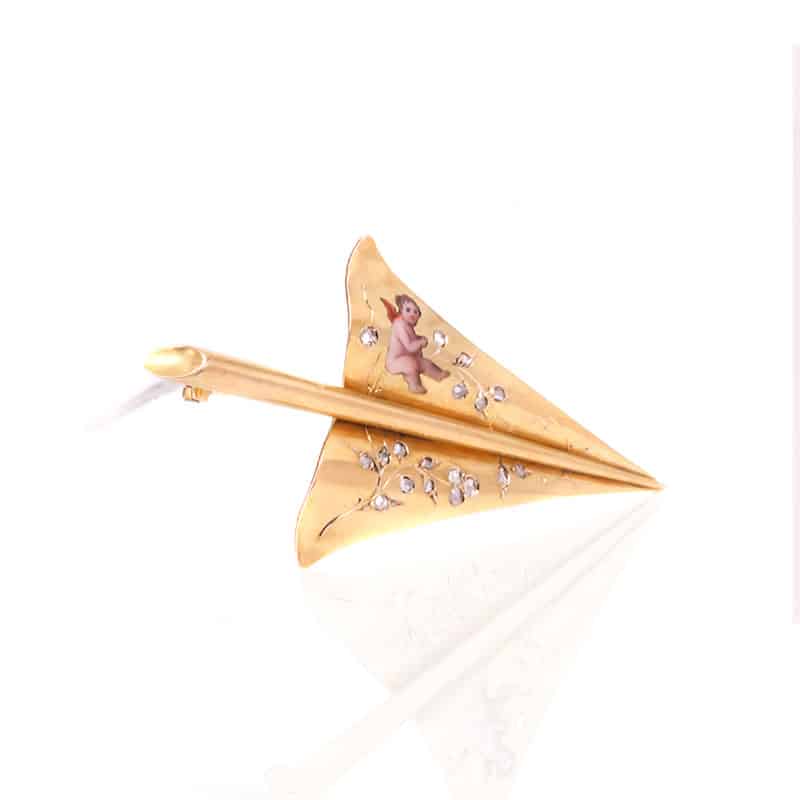
The image of Cupid, or that of a bow and quiver, became popular motifs throughout the Romantic period. Romanticism was an artistic movement which flourished across Europe towards the end of the 18th century. Jewellery from this era was often created with layered meanings and featured a strong use of allegory. During this era, an arrow can be interpreted as the beginning of a new love, as Cupid’s arrow is his instigator. Arrow motifs were a popular choice for brooches during the Victorian era, often exchanged as gifts between sweethearts.

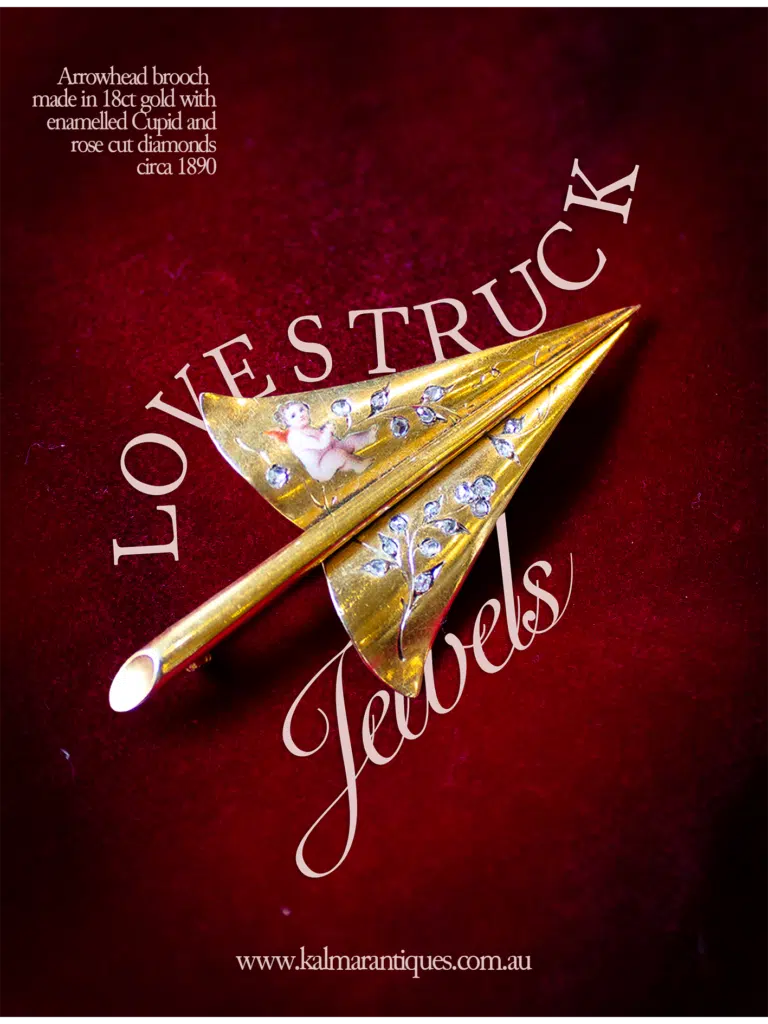
Below is a brooch dating from the late 19th century in the shape of on arrowhead. On the arrow, is an enamelled depiction of Cupid, sitting amongst vines set with rose cut diamonds. Other versions of the arrow motif can be seen below set with a single gemstone in the middle such as a garnet and opal.
When a scene consists of many arrows or a quiver full of arrows, this was an allegory for fertility and the wish for many children. The motif of a bow and arrow crossed with a quiver full of arrows was therefore a popular symbol to include on marriage gifts. This adaptation of meaning comes from the psalm 127:3-5 in the Bible: “Behold, children are a heritage from the Lord, the fruit of the womb is a reward. Like arrows in the hand of a warrior, so are the children of one’s youth. Happy is the man who has his quiver full of them; they shall not be ashamed but shall speak with their enemies in the gate.”


The motif of a bow and quiver can be seen on this ladies pocket watch from the 18th century which is part of our the Kalmar Vault Collection. This pocket watch was likely a marriage gift to a young bride to mark her wedding day. The arrow remains a popular motif in jewellery design and is still used today in Valentine’s Day themed jewellery.