A History of Suffragette Jewellery
The Suffragette movement was the campaign for women’s rights to vote in political elections and participate in public life. Jewellery and accessories formed important tools as means of identification and self-expression during a time when women’s voices were silenced in political settings. These items of jewellery now serve as poignant reminders of the struggles that women have endured and the sacrifices many made, in the campaign for gender equality.
The suffragette movement took place from the late 19thto the early 20thcenturies. The word suffrage is derived from the Latin word ‘suffragium’, meaning the right or privilege to vote. There were many different issues debated throughout the movement, but the lasting impact was the voting rights of women. The fight for women’s voting rights was taken on by varying organisations, however, the basis for the suffragette movement started with the National Union of Women’s Suffrage which was founded by Millicent Fawcett in 1897. The work of the National Union was carried on by lead suffragette Emmeline Pankhurst who later founded the Women’s Social and Political Union in 1903. It was the efforts led by Emmeline Pankhurst and her daughters that have become the most synonymous with the suffragette movement within Britain.
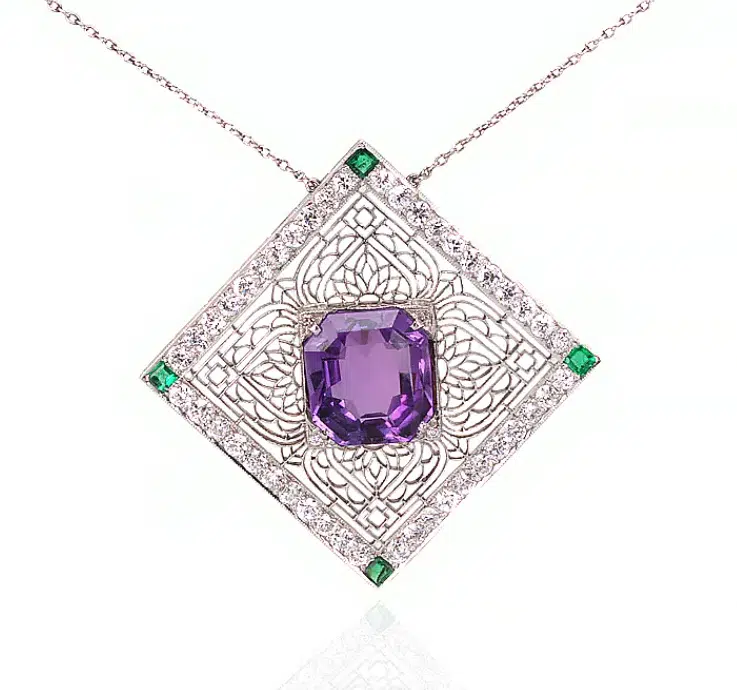
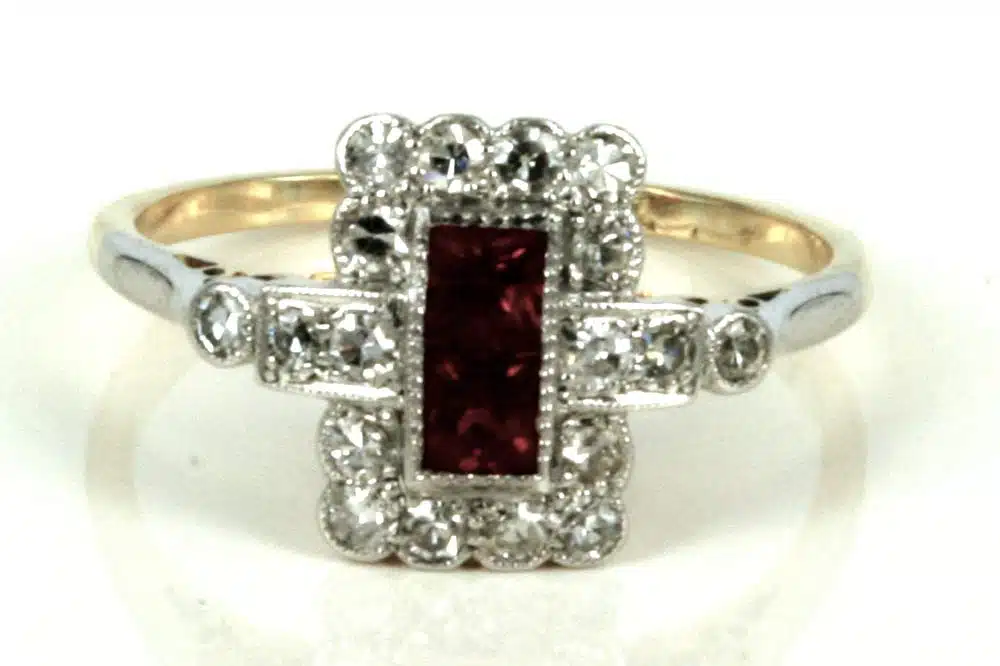
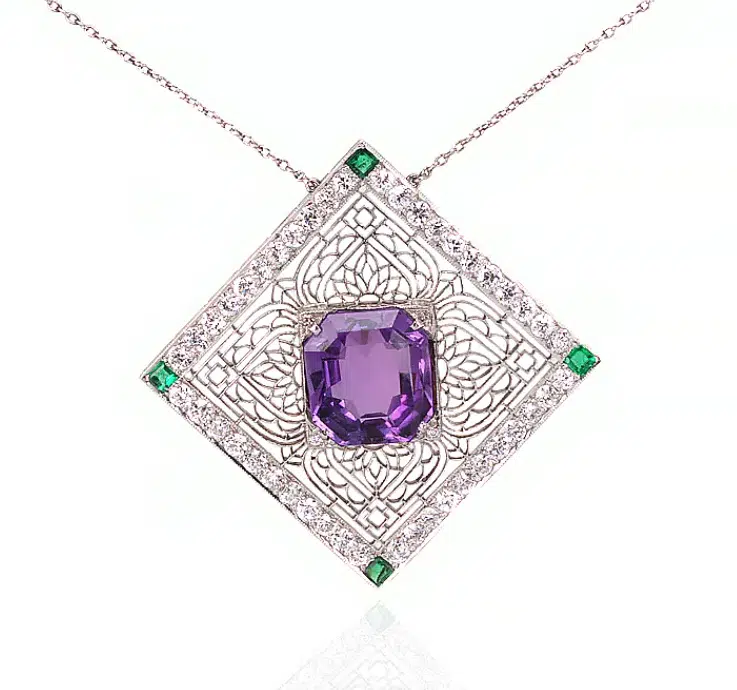
As the strength of the movement grew, supporters wanted to express their pride and allegiance to the cause through methods of self-presentation. The colours of green, white and violet became coded symbolism for the suffragette movement and were used as effective branding by the WSPU. Mrs Pethick Lawrence devised the tri-colour combination of white, purple and green. In a Spring 1908 issue of Votes for Women she described the symbolism behind each colour; “Purple…is the royal colour..It stands for the royal blood that flows in the veins of every suffragette, the instinct of freedom and dignity…white stands for purity in private and public life… green is the colour of hope and the emblem of spring” (Goring, 2002).
These colours and the use of jewellery was deeply associated with the suffragette movement. Brooches were awarded to members of the movement who made sacrifices for the cause. This included serving jail time for protest-related offences and who engaged in hunger strikes for the cause. A specific brooch called the Holloway brooch was designed by Syliva Pankhurst and gifted to suffragettes to mark their release from Holloway prison. “The design incorporates a portcullis symbol of the House of Commons, and convict symbol and hanging chains with a purple, white, and green ribbon superimposed on the front” (Dahms, 2018). These particular brooches were gifted internally within the organisation, however, jewellery using the tricolour scheme was available to the wider public in order for them to show their support to the cause.
"Every jewel will have had a unique personal story attached to it, with the capacity to bear witness to one of the most remarkable and sustained movements for social and political change in the 20th Century" (Goring,2002)
Eventually, the support of the suffragette movement had reached such popularity that larger commercial firms began to express their support. London based jeweller, Mappin and Web, released a range of suffragette jewellery in their 1908 Christmas catalogue. The large department store, Selfridges, also showed their support to the cause offering ranges of clothing for women in the suffragette tricolours and selling red lipstick, which women had taken to wearing as a sign of their fierce independence. “Selfridges advertised regularly in the suffragette paper Votes for Women, and designed clothes for the women to wear at their demonstrations. “Huge numbers of women would turn out for these demonstrations and create a tricolor tide overtaking the streets of London” (Dahms, 2018).

The right for women to vote was achieved in New Zealand in 1893 making it one of the first places in the world. Wyoming in the United States had allowed for women to vote, although it would take until 1919 for the right to be extended to women across all other states. South Australia was progressive on the world scale allowing not only women, but women of all races, the right to vote in 1895. The rest of Australia would grant women the right by 1902, although indigenous women weren’t included nation-wide until 1962. It wasn’t until 1928 that women in Britain were granted voting rights, still under a century ago. Suffragette jewellery remains highly collectable and are important reminders of our human history. These pieces of jewellery serve as important reminders of the women and men who pioneered voting rights for women across the Western world, and the need for continued progress for women’s voting rights on a global scale.

Sources:
Antique Animal Jewellery (2022). Suffragette jewellery; https://www.antiqueanimaljewelry.com/post/suffrage-jewelry
Dahms, Sebastian (2018). The history of suffragette jewellery; Friar House Jewellery: https://friarhouse.com/blogs/friar-house-antique-jewellery/the-history-of-suffragette-jewellery
Goring, Elizabeth (2002). ‘Suffragette jewellery in Britain’. Decorative Arts Society Journal; Vol 26.
Parliament of Australia (2026). ‘Women’s suffrage in Australia’; Women’s Suffrage in Australia – Parliament of Australia
Smith, Jodie (2016). ‘The history of suffragette jewellery: a guide to suffragette jewellery; ACS Silver: https://blog.acsilver.co.uk/2016/06/16/history-suffragette-jewellery/
Yaegar, Lynn (2015). Inside the suffragette jewellery box: how women of the movement wore their pride on their sleeves; Vogue Magazine: https://www.vogue.com/article/suffrage-jewelry-history